
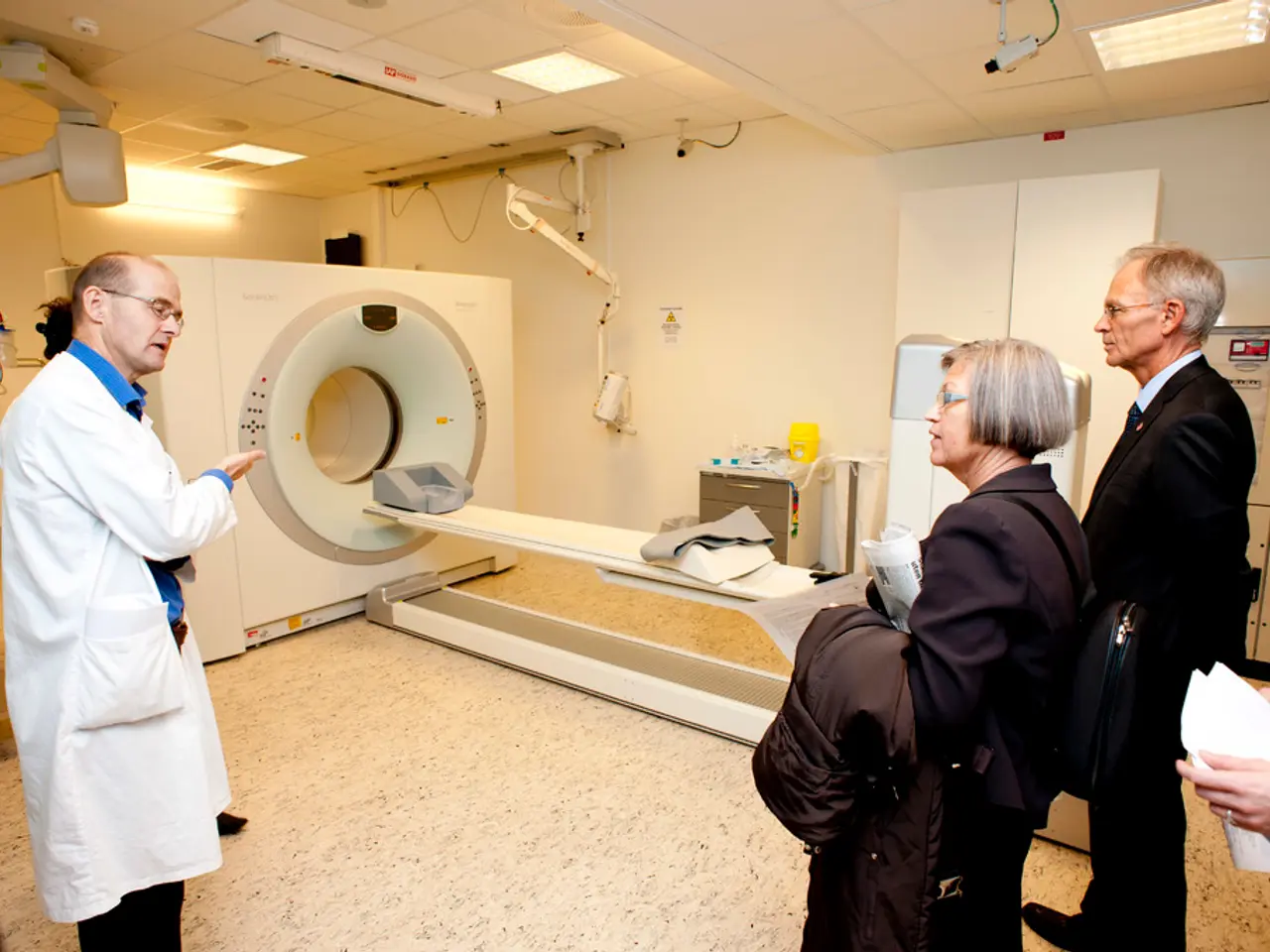
Cutting-edge medical lab unveiled in Rīga, Latvia
In the heart of Riga, two leading laboratories - Central Laboratory and E. Gulbja Laboratory - are making waves in the healthcare industry with their recent advancements in automated laboratory testing. The rapid expansion of these new facilities, driven by lessons learned from the Covid-19 pandemic, is positioning the Baltic region as a hub for cutting-edge diagnostics.
Zane Kaktiņa, Chairwoman of the Board of Central Laboratory, has emphasised the need for export possibilities in their country, as the region's push towards AI and automation aligns with global trends favouring rapid, reliable, and scalable solutions.
One of the key developments is the establishment of AI Competence Centres. Riga Technical University (RTU) and partners in Latvia are working to create an artificial intelligence centre to strengthen AI competencies locally. This initiative indicates a concerted effort to integrate AI into various sectors, including laboratory diagnostics, to enhance data processing, analysis, and decision-making efficiency.
Innovations like the CLIA Uromodulin kit, designed for the KleeYa® analyser, are also making waves. These fully automated, high-throughput testing kits enable results in as little as 15 minutes, drastically reducing turnaround times while maintaining high precision and accuracy of diagnostic results.
These advancements have significant implications for speed, accuracy, and export potential. Automation and AI integration substantially compress test result turnaround times, enabling faster clinical decision-making and higher throughput in laboratories. AI-driven diagnostic systems also reduce human error and standardise testing procedures, potentially increasing diagnostic accuracy and reproducibility.
The Baltic region's push towards AI and automation in diagnostics positions Baltic companies and research centres to develop competitive products and services for export markets, especially in Europe where demand for advanced diagnostic tools is growing. Adherence to international standards, like ISO accreditation seen in testing labs collaborating on consumer product testing, supports trust and market access abroad.
Both Central Laboratory and E. Gulbja Laboratory are investing in technology to enhance their services. The new laboratories, one of the most modern in the Baltics, can store up to 27,000 samples and perform up to 4,400 tests per hour. The investments in technology aim to improve speed and efficiency in critical situations, making them well-equipped to respond to pandemics like Covid-19.
The range of tests and diagnostics in the new laboratories is rapidly evolving, with the companies currently not exporting but exploring other markets. The lessons from the Covid-19 pandemic highlight the importance of local resources, knowledge, and preparedness in laboratory operations.
As these laboratories continue to innovate, they are not only improving local healthcare quality but also boosting the region's ability to compete and export in the global automated diagnostics market. With their focus on speed, accuracy, and scalability, the Baltic region's laboratories are poised to make significant contributions to the global healthcare industry.
- Newspaper headlines might read, "Baltic Region Takes Center Stage in Global Healthcare with Cutting-edge Diagnostics" or "Latvia's Leading Labs Aim for Global Market with AI and Automation Advancements."
- The integration of AI and automation in medical-conditions diagnostics could revitalize the media landscape, with discussion on the latest developments in health-and-wellness sectors dominated by breakthroughs from the Baltic region.
- In the science community, collaborations between Baltic research centers and radio programs addressing innovative medical technology could delve into the topic of the impact of AI on laboratory testing and its potential for accurate and rapid diagnostic results during critical situations, such as a pandemic like COVID-19.