
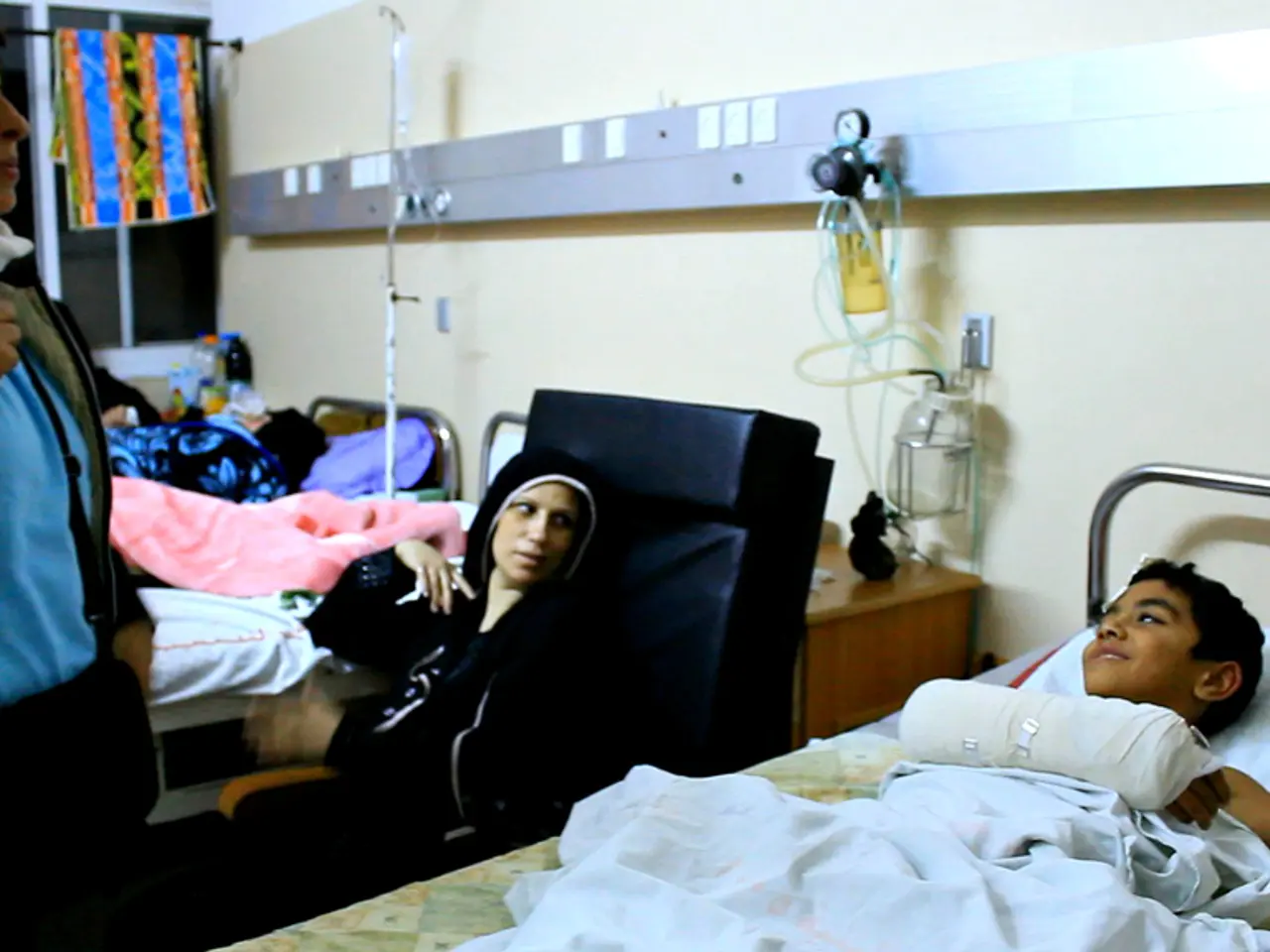
Hospital stays covered by Medicare: Costs beyond insurance coverage
In the realm of healthcare, navigating the intricacies of Medicare coverage can be a daunting task. Here's a simplified guide to help you understand how Medicare covers hospital stays, long-term care, and related services.
Firstly, it's important to note that Medicare Part A, specifically, covers inpatient hospital care. However, the coverage and costs change after the initial 60 days of a hospital stay. For the first 60 days, Medicare covers all costs after the deductible of $1,676 for each benefit period. After this, daily coinsurance applies, with the amount varying between approximately $419 to $408 for days 61–90.
The situation becomes more complex from days 91–150. During these days, Medicare continues to cover some costs, but only for your lifetime reserve days, a total of 60 extra days for your lifetime. During these days, you pay a higher daily coinsurance of about $816 to $838. After 150 days or once the reserve days are exhausted, Medicare stops covering hospital costs entirely, and you become responsible for 100% of all charges.
It's also worth mentioning that if a person needs to stay in a hospital again before the 60 consecutive days have passed, the second stay falls within the same benefit period as the first, and they will not have to meet the deductible twice.
Long-term care hospitals provide the same types of care as acute care hospitals, but people typically stay in a long-term care hospital for longer than 25 days. However, it's important to note that Medicare Part A does not cover the costs of long-term stays at skilled nursing facilities.
Skilled nursing facilities, on the other hand, offer services such as skilled nursing care, rehabilitation services, custodial care, medically-related social services, dietary services, and pharmaceutical services.
Inpatient rehabilitation facilities are covered by Medicare if deemed medically necessary, and the same out-of-pocket coinsurance fees apply as for inpatient hospital stays. Medicare Part B may help cover doctor's services while a person is in a rehabilitation facility.
It's essential to remember that a doctor's order is required for Medicare to cover a hospital stay. Also, some Medicare Advantage or Medigap policies can help reduce out-of-pocket expenses for inpatient treatment.
Lastly, it's important to note that Medicare Part A helps cover the costs of stays at inpatient psychiatric facilities, but coverage may vary. Medicare covers up to 190 days of inpatient mental health care in a freestanding psychiatric hospital, but this limit does not apply to care in a Medicare-certified psychiatric unit in a critical access or acute care hospital.
In summary, Medicare provides full coverage after the deductible for the first 60 days, then requires daily coinsurance that increases after 90 days, using a lifetime reserve of 60 days for additional coverage. Once those reserve days are exhausted, Medicare pays nothing further for hospital stays. Understanding these details can help you better prepare for potential healthcare costs.
- Medicare Part A, in the realm of healthcare, specifically covers inpatient hospital care, but the coverage and costs change after the initial 60 days of a hospital stay.
- Long-term care hospitals provide the same types of care as acute care hospitals, but Medicare Part A does not cover the costs of long-term stays at skilled nursing facilities.
- Inpatient rehabilitation facilities are covered by Medicare if deemed medically necessary, and the same out-of-pocket coinsurance fees apply as for inpatient hospital stays.
- It's important to note that Medicare Part A helps cover the costs of stays at inpatient psychiatric facilities, but coverage may vary, and the limits for care in a freestanding psychiatric hospital are different from care in a Medicare-certified psychiatric unit in a critical access or acute care hospital.