
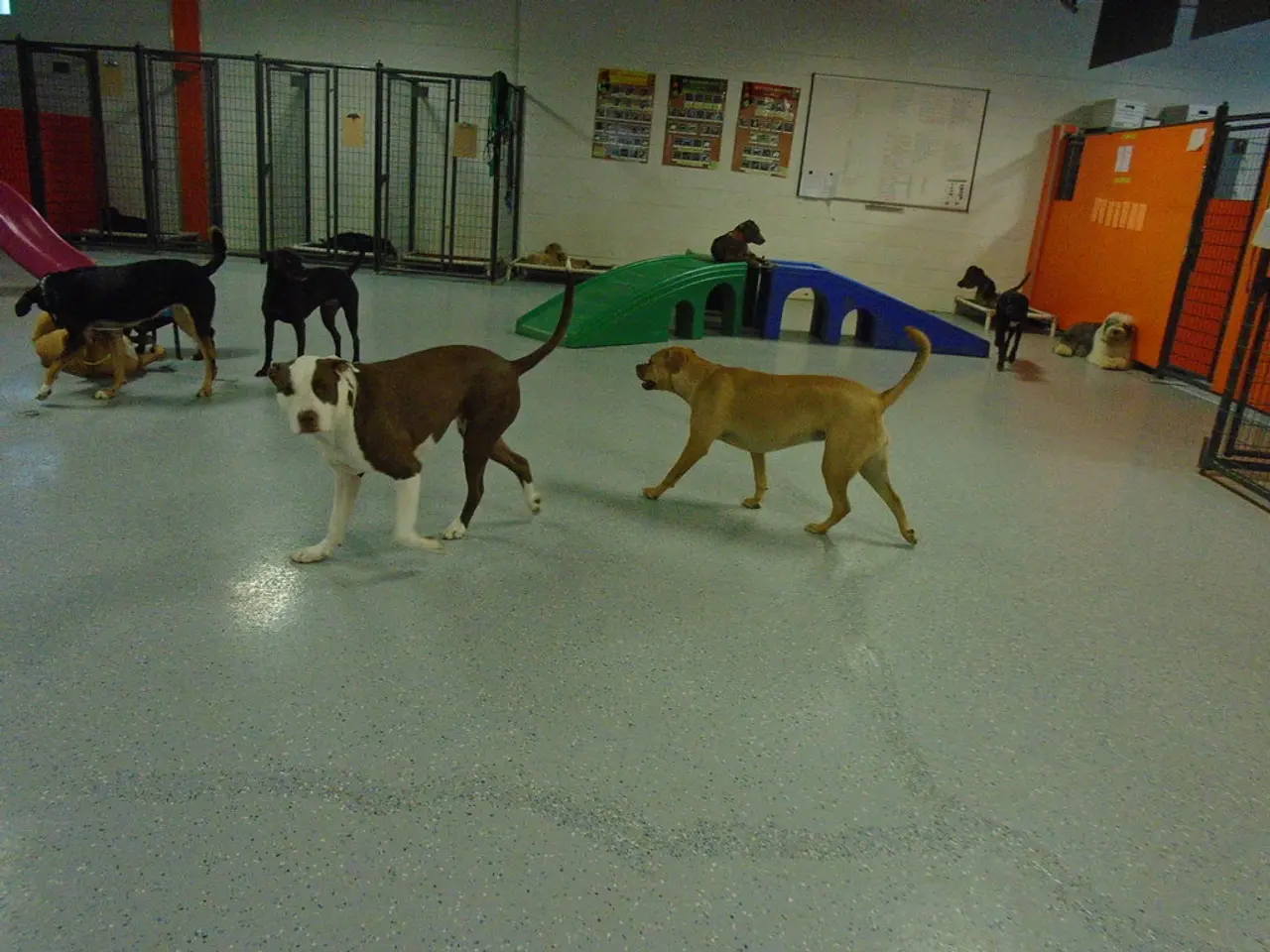
Moscow plans to relocate dogs from Yakut PZH to city zoos
In the vast and chilly expanse of Yakutia, also known as the Sakha Republic, a series of events are unfolding that promise to improve the lives of its four-legged inhabitants. The Department of Veterinary Medicine has announced free dog microchipping events across the region, aiming to keep track of these animals and ensure their safety.
Among those eager to contribute to this cause is Zlata Sycheva, a Yakutsk-based animal rights activist. Sycheva has expressed her intention to work in a team for animal-related activities, with a focus on education, community engagement, and advocacy.
However, the issue of dog attacks on children in Yakutia remains a pressing concern. According to reports, more than two thousand people, including over a thousand children, have been injured by such attacks. To address this issue, common solutions include community education and awareness campaigns, the implementation of animal control programs, the strengthening of local animal welfare laws, engagement with indigenous and local communities, the provision of resources and shelters for stray and abused animals, and collaboration with veterinary and animal behavior experts.
In a promising development, the head of the city, Sардана Авксентьеva, has expressed a willingness to collaborate with animal rights activists. This collaboration could potentially lead to the transfer of the Yakutsk holding point to activists, as proposed by Margarita Gavrilova, a lawyer and animal rights activist from Moscow, who has offered to take care of the remaining 72 dogs in the holding point. Ilona Bronyevich, another Moscow-based animal rights activist, supports this idea, highlighting the feasibility of such a transfer without significant financial resources and citing precedents for transferring animal care authority to NGOs and non-profit organizations.
The scientific community has also emphasized the need to work with pet owners who seasonally take dogs and release them onto the streets at the end of the summer season, thereby contributing to uncontrolled animal reproduction. The director of "Zhilkomservis", Valeria Bilous, has stated that the animals in the Yakutsk holding point can be taken away in two months.
As the situation in Yakutia unfolds, it is clear that a collaborative approach involving the city administration, animal rights activists, and the scientific community is crucial to improving animal welfare and addressing the issue of dog attacks on children. The unique geographic and cultural context of Yakutia necessitates solutions that are adapted to the region, ensuring the best possible outcomes for both humans and animals.
- Embracing a holistic approach, the health-and-wellness of Yakutia's pets can be improved by collaborating with the scientific community, focusing on education about responsible pet ownership and seasonal care.
- To promote a pet-friendly lifestyle, it's essential to reinforce community engagement, education, and advocacy, as demonstrated by Zlata Sycheva's work in Yakutsk.
- Fitness-and-exercise for pets can potentially reduce aggression and improve their overall health, making it an important aspect of animal welfare initiatives, as proposed by experts in the scientific community.