
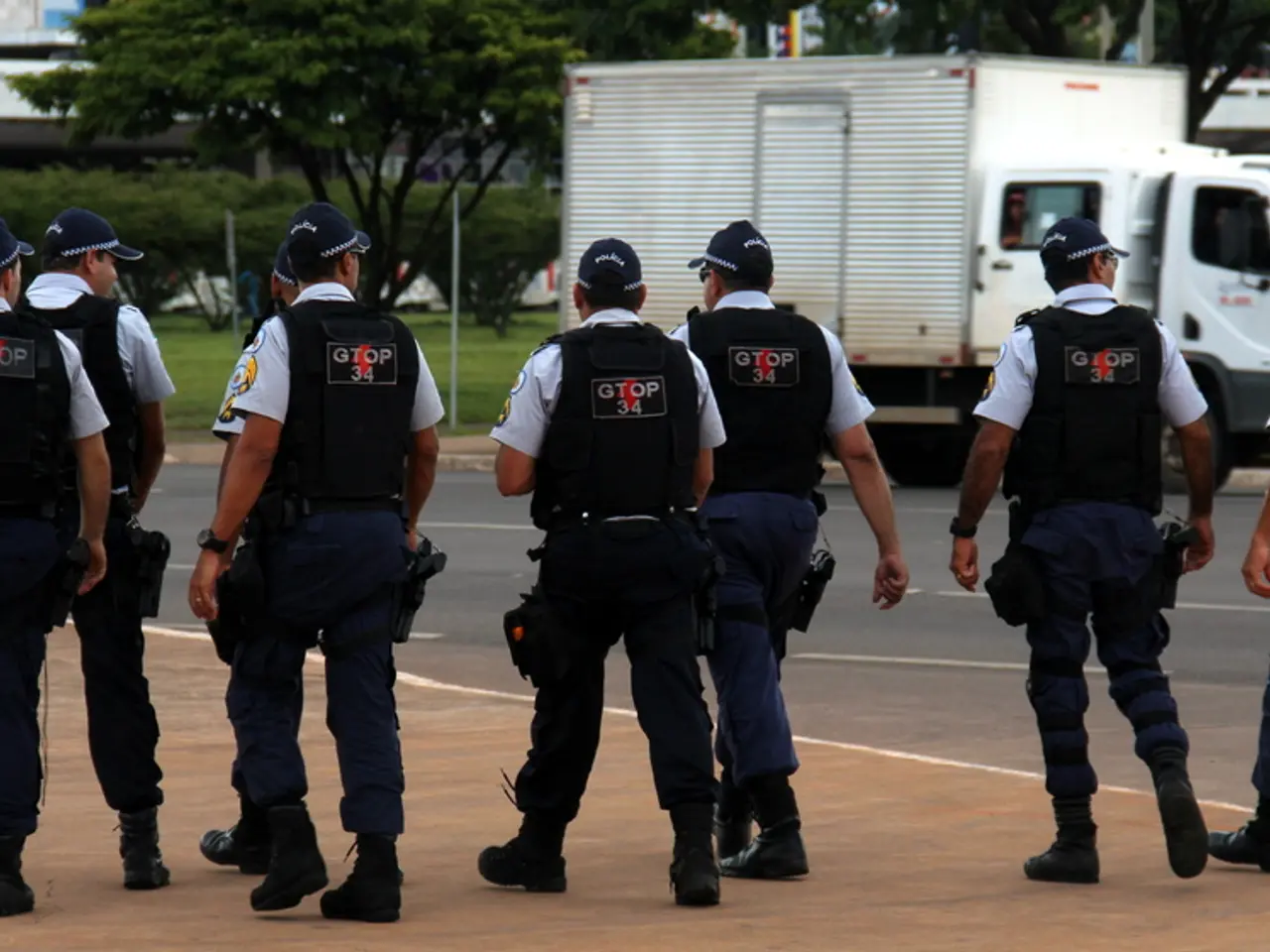
Police officers from the PSNI (Police Service of Northern Ireland) were found to have neglected their obligation to provide necessary care to a teenager who was hit by a vehicle and subsequently passed away, according to an investigation.
News Article: Police Ombudsman Report Highlights Failures in Duty of Care by PSNI
In a shocking turn of events, a detailed report by the Police Ombudsman for Northern Ireland has concluded that the Police Service of Northern Ireland (PSNI) committed multiple breaches in their duty of care towards a vulnerable teenager, Shannon McQuillan, in Co Antrim in 2018.
Shannon McQuillan, a 19-year-old law student, and her boyfriend, Owen McFerran, were left alone at a bus shelter by three PSNI officers, a Northern Ireland Ambulance Service (NIAS) paramedic, and a trainee emergency technician in the early hours of January 20, 2018. Tragically, Ms. McQuillan was killed instantly when she and Mr. McFerran were struck by a van on the Moneynick Road shortly afterward, while Mr. McFerran sustained life-changing injuries.
The Ombudsman’s report found that the PSNI officers failed to perform even basic checks on the couple’s condition and vulnerability. The report also criticised the lack of recognition of the serious risks of leaving the two individuals alone beside a busy road at night and the failure to safeguard their welfare appropriately. These failures constituted a breach of the officers' duty of care obligations.
Subsequent tests established that both Ms. McQuillan and Mr. McFerran had high levels of alcohol in their blood at the time. The report also highlighted that the communication between the police officers in attendance at the Moneynick Road and the NIAS staff had been "wholly inadequate".
Regarding policy changes, the Ombudsman’s report recommended new policies aimed at improving coordination and communication between the PSNI and the Northern Ireland Ambulance Service (NIAS). These include clearer protocols on how to assess and manage vulnerable persons at scenes requiring emergency services, enhanced joint training and communication requirements between police officers and ambulance personnel, and procedures to prevent vulnerable persons from being left alone in potentially dangerous locations after first responders have attended.
Following a discussion between the medical team and PSNI officers, Ms. McQuillan and Mr. McFerran were left alone at a bus shelter on the Moneynick Road, despite the ambulance staff's concerns about Ms. McQuillan's behavior. The Ombudsman’s report also found that the NIAS and PSNI encountered Ms. McQuillan and Mr. McFerran at 2am in a car park in Magherafelt.
The tragic incident resulted in the death of Shannon McQuillan and life-changing injuries for Owen McFerran. Subsequent PSNI misconduct proceedings found the conduct of two of the three officers who had attended the ambulance amounted to gross misconduct. This investigation and subsequent policy recommendations aim to prevent a recurrence of the tragic outcomes seen in this case and to ensure that duty of care towards vulnerable people is strictly upheld by both PSNI and NIAS personnel. The report highlighted that the PSNI’s approach at that time was wholly inadequate and necessitated comprehensive reforms in operational policies and inter-agency cooperation.
[1] Police Ombudsman for Northern Ireland Report [2] BBC News Article [3] The Guardian Article [4] Independent.ie Article [5] The Irish Times Article
- The shocking report by the Police Ombudsman for Northern Ireland, highlighting the inadequate approach of the PSNI in a case involving Shannon McQuillan and Owen McFerran, has brought to light the need for improved collaboration between the PSNI and general-news agencies such as the Northern Ireland Ambulance Service (NIAS) in health-and-wellness matters, particularly for vulnerable individuals.
- While the tragic incident involving Shannon McQuillan and Owen McFerran is primarily categorized as a crime-and-justice issue, the subsequent PSNI Ombudsman's report emphasizes the importance of science, as it underlines the need for evidence-based policies and procedures in the training of emergency responders to ensure duty of care is stringently upheld, potentially preventing future similar incidents.




%20were%20found%20to%20have%20neglected%20their%20obligation%20to%20provide%20necessary%20care%20to%20a%20teenager%20who%20was%20hit%20by%20a%20vehicle%20and%20subsequently%20passed%20away%2C%20according%20to%20an%20investigation.)