
Space Radiation's Potential for Altering Seeds for Human Advancement
In the realm of agricultural innovation, a novel technique called space mutagenesis is capturing the attention of scientists worldwide. This groundbreaking approach involves exposing seeds or plants to space conditions to induce genetic mutations, which can potentially lead to improved crop traits.
The United Nations' Food and Agriculture Organization (FAO) and the International Atomic Energy Agency (IAEA) are partnering in this research, with the IAEA taking the lead. This collaboration aims to unlock the full potential of space mutagenesis for creating hardier crops with greater yields.
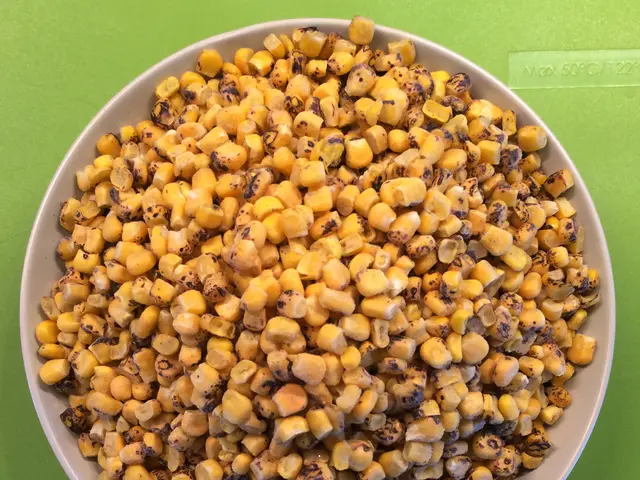
Chinese scientists have been at the forefront of this field for over three decades. Their experiments have seen thousands of seeds, including those of cotton, tomatoes, watermelons, corn, and sweet peppers like Yujiao 1, exposed to space radiation via satellites and space stations. Yujiao 1, a sweet pepper variety released in 1990, boasts better fruit, resistance to disease, and a 16.4% higher yield, demonstrating the potential benefits of space mutagenesis.
Research has shown that space mutagenesis can lead to intergenerational inheritance of induced stress in crops like rice. This includes DNA polymorphisms and methylation patterns that can persist across multiple generations, potentially offering valuable genetic diversity for crop improvement. However, it's important to note that while space mutagenesis holds promise, not all outcomes are beneficial or stable across generations.
Biotechnology plays a crucial role in crop improvement by enhancing traits through genetic modification. Techniques like knocking out genes for cytokinin degradation have increased grain yields in crops under various environmental conditions. Projects like the Moon-Rice initiative aim to develop crops that are suitable for space habitats, involving genetic manipulation to improve productivity and nutritional content, which can also benefit Earth-based controlled environments.
Companies and researchers are exploring unconventional methods, such as sending seeds to space for mutagenesis, although these efforts may not always yield useful results. The IAEA maintains a Mutant Variety Database for plants modified by space-based radiation or other methods, which helps researchers understand the mechanisms involved and mitigate the risk of negative traits spreading into wild plant populations.
The benefits of space mutagenesis can be significant when scaled to modern agriculture. DNA sequencing will be used to compare mutations generated in space with those from seeds kept inside the ISS and those irradiated under laboratory conditions. As the practice of agriculture has a long history in human society, the integration of space mutagenesis and biotechnology is a promising step towards creating more resilient and productive crops for a sustainable future.
The work on space mutagenesis will continue due to its potential benefits, with the goal of creating crops that can withstand the challenges of climate change and feed a growing global population. While the cost of space mutagenesis is high, the potential rewards make it a worthy investment for the future of agriculture.
- Scientists working in the field of health-and-wellness, particularly those focusing on crop improvement, are investigating the intergenerational inheritance of induced stress in crops through space mutagenesis, a technique that involves exposing seeds to space radiation.
- In the realm of space-and-astronomy, the International Atomic Energy Agency (IAEA) is not only collaborating with the United Nations' Food and Agriculture Organization (FAO) to explore the use of space mutagenesis for hardier crops, but also maintaining a Mutant Variety Database to mitigate the risk of negative traits spreading into wild plant populations, thereby contributing to the field of health-and-wellness and the advancement of science.