
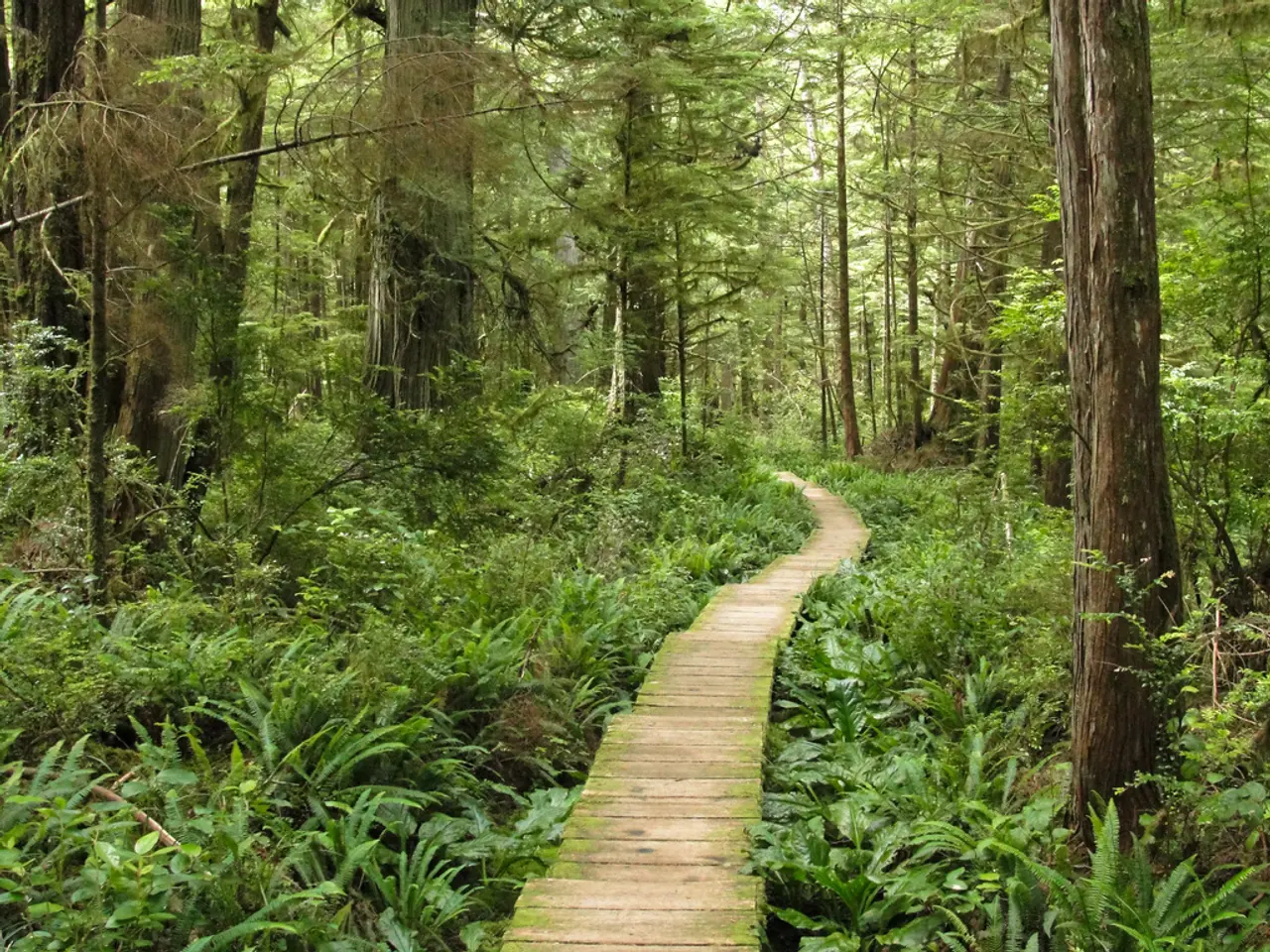
Strict new standards set for forest management, now focusing on green practices
The Green Party in Germany is advocating for a revamp of forest policies with a focus on promoting forest health, biodiversity, and climate resilience. Here are the key proposals that the party has put forward:
- Increasing Forest Protection and Expansion
The Green Party is promoting natural forest growth and restoration instead of intensive forestry practices. This aims to protect existing forests and expand the forest cover, thereby enhancing the overall health of the forests.
- Enhancing Biodiversity
To boost biodiversity, the party proposes measures such as mixed-species forests, leaving deadwood for habitat, and reducing monocultures. These steps are intended to create a diverse and thriving ecosystem within the forests.
- Strengthening Climate Resilience
The Green Party is advocating for adapting forest management to changing climate conditions. This includes protecting old-growth forests, which store more carbon, and managing forests in a way that promotes their ability to adapt to climate change.
- Phasing Out Clear-Cutting Practices
The party is pushing for a phase-out of clear-cutting practices and a reduction in the use of pesticides and fungicides harmful to forest ecosystems. This is aimed at preserving the natural beauty and integrity of the forests.
- Promoting Sustainable Forestry Certification
The Green Party supports sustainable forestry certification to ensure ecological and social standards. This will help ensure that forest management practices are sustainable and do not harm the environment or local communities.
- Supporting Indigenous and Community Rights
The party wants to involve indigenous and local communities in forest management decisions. This is aimed at ensuring that the management of forests is both environmentally sustainable and culturally appropriate.
- Investing in Research and Monitoring
The Green Party is advocating for investments in research and monitoring to better understand and respond to forest health threats like pests and diseases. This will help in proactive management of forest health issues.
- The "Future Forest Bonus" and "Regeneration Bonus"
In addition, the Greens propose a "future forest bonus" as an incentive for forest owners who operate according to ecological criteria beyond the minimum standards. Forest owners who forgo the use of wood on certain areas would be compensated with a "regeneration bonus."
- Setting Higher Ecological Standards for Publicly Owned Forests
For publicly owned forests, the Greens want to set higher ecological standards. This includes allowing dead wood to remain in areas where the forest has suffered major damage to build up humus and protect young trees.
- Reserving 5% of Forest Area for Nature Conservation
Finally, the Greens want to reserve 5% of Germany's forest area for nature conservation, with no forest use on these areas. This is aimed at preserving the natural habitats within the forests and promoting biodiversity.
The Green Party's forest policy proposals are designed to create a sustainable and resilient forest ecosystem in Germany. For the most authoritative and detailed account of these proposals, consulting the party's official program documents or recent policy announcements would be necessary.
The Green Party's environmental-science proposals for forest policy in Germany extend beyond just forest health and climate resilience, they also focus on the health-and-wellness of those forests, aiming to enhance biodiversity through measures such as mixed-species forests and leaving deadwood for habitat. Moreover, the party's mental-health emphasis is reflected in their commitment to supporting indigenous and community rights in forest management decisions.