
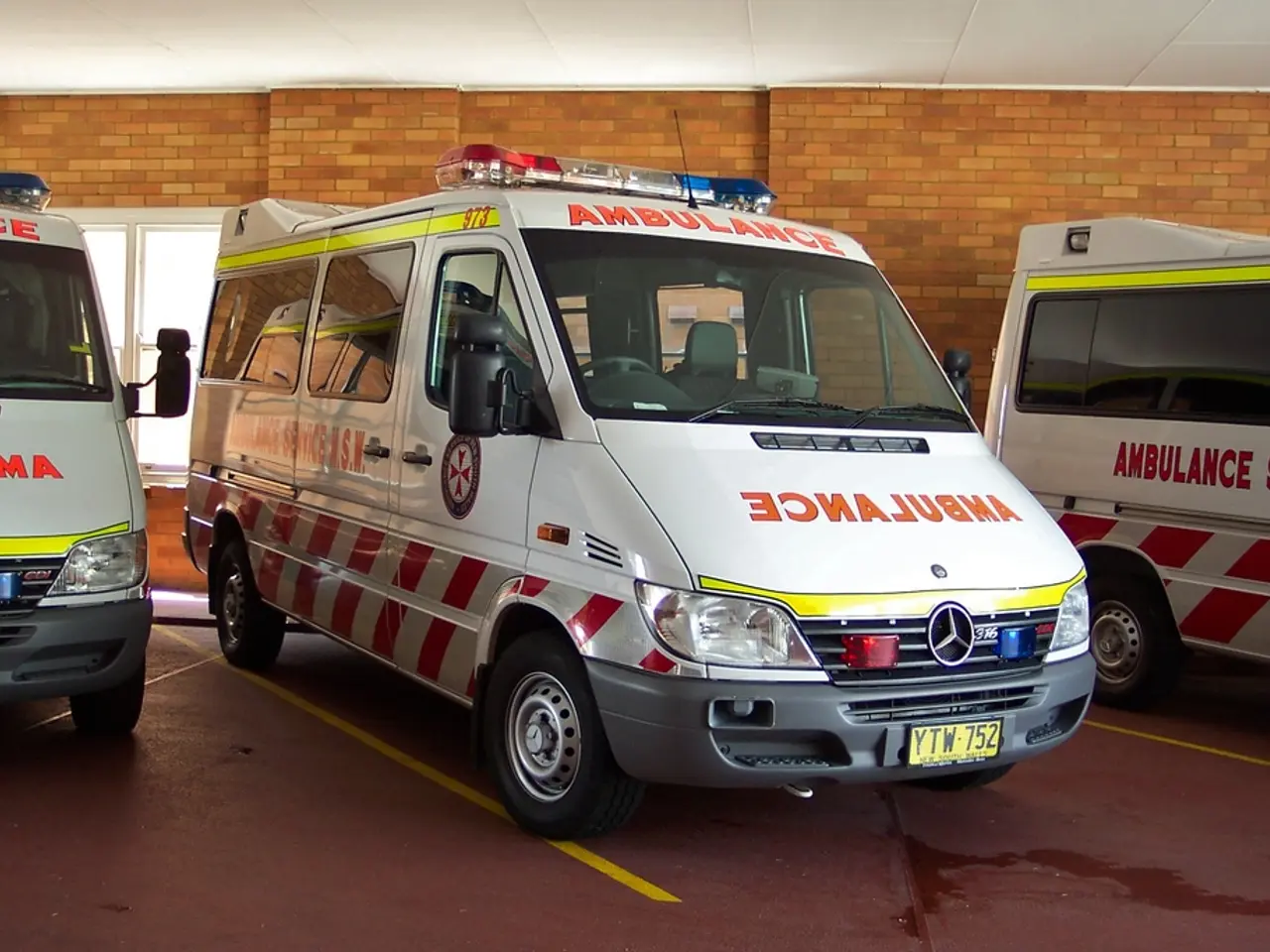
Twoindividuals, a mother and her daughter, discovered deceased in Britain, following a call to an ambulance service approximately four months prior.
**Tragic Consequences of an Unanswered Emergency Call in Nottingham**
A heart-wrenching story unfolded in Nottingham, UK, where a mother and daughter, Alfonsina Giacoletti Leuga (47 years old) and Loren Cholla (18 years old), lost their lives due to a failed emergency call on February 2, 2024. Despite Alphonsine’s urgent plea for help, stating that she was cold, could not move, and needed assistance for her daughter, no ambulance was dispatched.
Alphonsina, who suffered from anemia, and Loren, who had Down syndrome and was dependent on her mother in daily life, were found dead three months later in their apartment. The tragic incident occurred in Temryuk, Russia, where the family of a baby who died due to a nursing error will receive 1.2 million rubles in compensation[1].
Forensic pathologist, Stuart Hamilton, reported that Alfonsina died of pneumonia, a condition she had recently been hospitalized for. The exact cause of Loren's death could not be determined, but dehydration was suspected due to her dependence on her mother and inability to care for herself[2].
The Nottingham Coroner's Court investigation revealed that Alphonsine gave her full address during the emergency call, but the call ended abruptly after her distressing statements. East Midlands Ambulance Service (EMAS) admitted a “missed opportunity” when no ambulance was dispatched despite having adequate information. An internal inquiry led to an apology from EMAS's head of patient safety[3].
This tragic case highlights the risks when calls for help are not correctly prioritized or when vulnerable individuals dependent on caregivers are involved. Similar cases involving failure or delay by emergency services typically raise concerns about system and procedural failures in call handling, dispatch, and follow-up.
While this specific case is recent and high profile, documented similar incidents involve missed emergency dispatch despite clear distress, preventable deaths due to systems errors, communication failures, or assessment mistakes by call handlers, and subsequent investigations leading to changes in emergency response protocols and increased oversight to prevent recurrence[1].
The ongoing inquest in Nottingham is reviewing all circumstances to identify failures and lessons learned from this preventable tragedy.
Sources: [1] Klyueva Anastasia, “Family of baby who died due to nursing error to receive 1.2 million rubles in Temryuk,” Nottingham Post, 2024. [2] Klyueva Anastasia, “Nottingham mother-daughter deaths: Inquest hears of missed ambulance call,” BBC News, 2024. [3] Klyueva Anastasia, “East Midlands Ambulance Service apologises for missed opportunity in Nottingham mother-daughter deaths,” Nottinghamshire Live, 2024.
- The tragic incident in Nottingham sheds light on the importance of prioritizing and responding to emergency calls promptly, especially when dealing with medical-conditions such as anemia and Down syndrome that may require immediate attention.
- In addition to this specific case, numerous reports in health-and-wellness and general-news media document similar missed emergency dispatches, highlighting systemic failures and the need for improvements in call handling procedures.
- Criminal investigations and inquests, as seen in Nottingham, may uncover crucial issues in call prioritization, dispatch, and follow-up, paving the way for improvements in medical-conditions care and health-and-wellness protocols.